
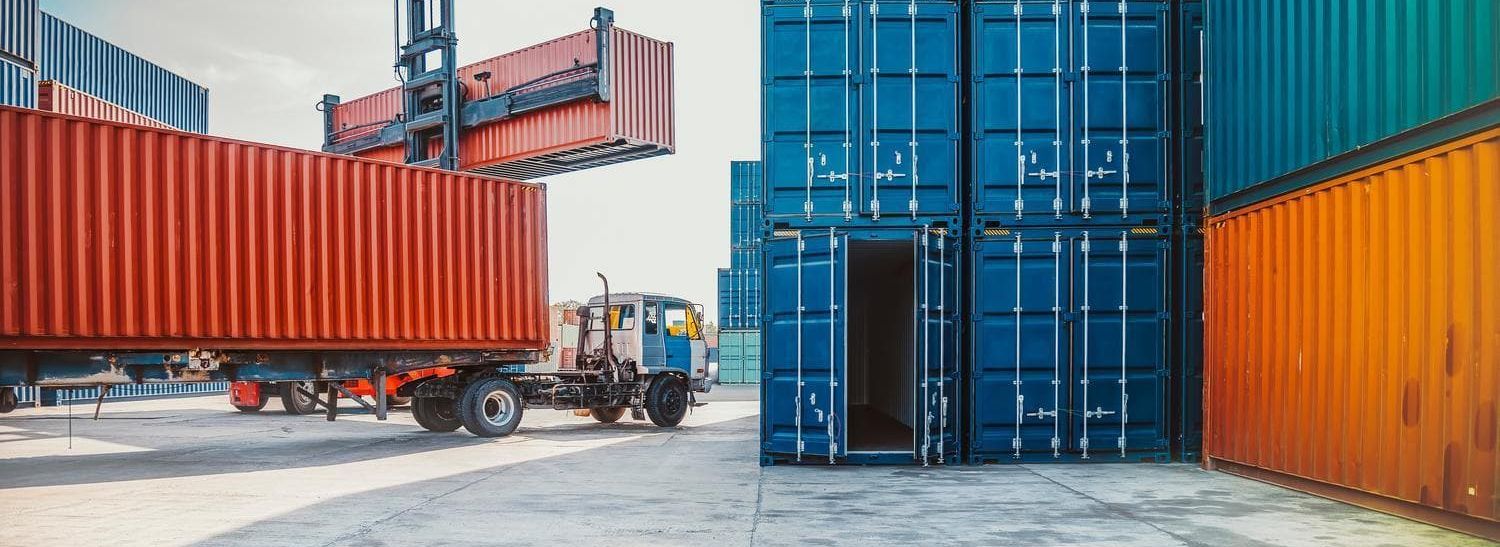
A definition from practice
What is terminal automation?
Terminal automation is the use of automated equipment and software systems to plan, control and execute container movements, from quay to yard to gate, with minimal manual intervention. The goal is rarely peak performance: terminals automate to achieve a consistent, calculable operational output, to lower operating costs over the long term and, above all, to get people out of dangerous areas.
A well-calibrated automated system does not depend on staff availability or on drivers having a good or a bad day. It delivers the reliable service levels that vessel contracts demand, a defined number of moves per hour, every shift. Manual terminals may reach higher peaks, but they also show far greater variation in performance.
Automation ≠ digitalization.
- Digitalization turns information into data.
- Automation uses that data to let systems plan and act.
- Today the two merge, no terminal automates without a significant digitalization effort, but they are not the same.
Overview: The three layers of terminal Automation
From low-cost processes to capital-intensive equipment
“Automation” covers very different things. We distinguish three layers and they differ enormously in cost, maturity and risk:
Planning and dispatch
Layer 1 · low cost, high return
Software-layer automation of vessel, berth and yard planning. Most mature TOS platforms already offer these features – for most terminals the natural starting point.
Process automation
Layer 2 · field processes
Automated data capture around the terminal: OCR at the truck gate, rail gate and quay crane, position detection, automated twistlock handling.
Equipment automation
Layer 3 · high cost
Automated yard stacking (the most mature discipline), horizontal transport with AGVs or automated straddle carriers, and remote or fully automated quay cranes. The layer where integration decides success or failure.
Even fully automated operations keep people in the loop: one operator typically supervises several machines from the control room and handles exceptions. Some niche tasks, reefer plugging, parts of twistlock handling, still resist full automation.
Why terminals automate
Four business drivers for automation
Consistent output
Vessel contracts define minimum productivity. Automation delivers a calculable, reliable output stream with fewer ups and downs than manual operations.
Cost
Lower long-term operating cost per move. In Europe, labor cost is the primary driver of automation projects.
Safety
Cranes lift 70–100 tons overhead every two minutes. Getting people out of these areas is a main driver everywhere. In the US alongside cost, in parts of Asia pushed by strict liability laws.
Workforce
Demographics will remove millions of active workers from Western European labor markets within a decade. Port investments span decades, planning must start now.
~3–4%
of global container terminal capacity is automated today.
~60 / 500
of the world's container terminals run automated operations.
25–55%
potential OPEX reduction, but only with rigorous planning and testing.
What automation is not
Three misconceptions we meet in every project
- “Automation is a silver bullet.”
It is not. Automation solves specific problems for specific terminals. The right level depends on your cargo mix, layout, finances, customers and people. Not every terminal needs the highest maturity level. The task is finding the sweet spot that fits your operational reality. - “Automation makes us more flexible.”
Initially it makes you less flexible. An automated terminal cannot outpace its design capacity: robots stack and drive where they are designed to, a manual operation can open an emergency stack, an automated one cannot. Well-tuned automation pays this back with independence from staff availability, but planning quality has to rise to match. - “Good components make a good system.”
In manual operations, performance adds up, a strong team compensates a weak link. In automation, performance multiplies: if one integrated component runs at 80 percent, the entire chain runs at 80 percent. This is why the industry pushes for standards, and why integration and quality assurance decide the outcome of every automation project.
Where should terminals start?
Finding your sweet spot instead of chasing maturity level 5
Understand your capacity and bottlenecks
Quay, yard or gate – where is the real constraint, today and at your target volumes? → CHESSCON Capacity
Compare scenarios with simulation
Manual vs. semi-automated vs. fully automated, AGV vs. automated straddle carrier, RTG vs. RMG; evaluate layouts and equipment with data before any capital is committed. → CHESSCON Simulation
Build a realistic business case.
Automation is capital-intensive and long-term. Benchmark against realistic (not optimistic) figures, and secure funding for the full journey, including integration and testing.
Test the integration before go-live
Validate TOS, ECS and equipment logic against a virtual model of your terminal. Emulation can start before the first line is drawn on site. → CHESSCON Virtual Terminal
Take your people with you
Brownfield projects succeed or fail with the workforce. Staff need to understand why automation makes sense for this terminal, and senior management must stand behind every decision.
Smaller gateway terminals often start with gate, rail and crane OCR plus automated stacking, the most mature and lowest-risk building blocks, and automate planning processes with modern software before touching equipment.
No automation without emulation
How simulation and emulation de-risk your project
Simulation supports the decision phase: it lets you take educated decisions on layout, equipment and automation mode long before implementation starts.
Emulation becomes your long-term tool: it connects your real TOS and ECS to a virtual terminal to verify that the entire system (software, equipment logic and their integration) actually works. Before go-live, after every software update, every year you operate. An automated terminal is one large integrated system; every change to one piece requires testing the whole.
No paper fallback
- A manual terminal can survive a system outage with paper and improvisation.
- An automated terminal cannot: if a core system fails, through a faulty update or a cyber attack, operations stop.
- Continuous QA and emulation testing are how you minimize that risk.
CHESSCON along your automation journey
One toolset from first study to daily operations
Capacity and Simulation
Decide
Throughput and yard capacity analysis, layout planning and scenario comparison for greenfield and brownfield terminals.
Virtual Terminal
Implement
A digital twin of your terminal for emulation, TOS/ECS integration testing and QA – before go-live and for every update after.
Shift Preview and Live View
Operate
Automated terminals demand better planning. Check the next shift by simulation before executing, and monitor everything in one real-time digital twin.
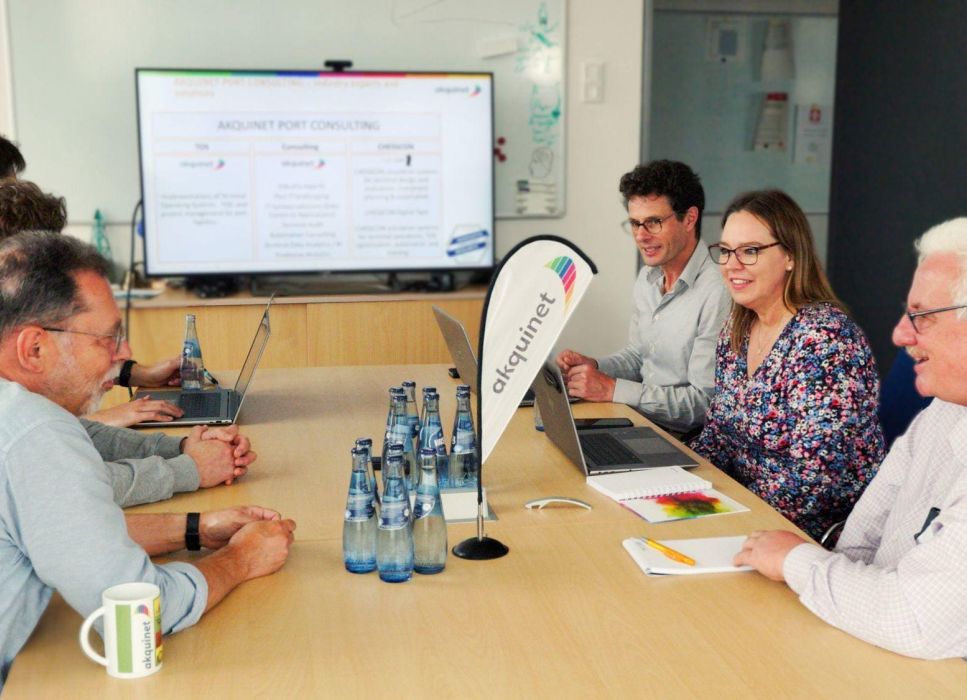
Port logistics experts of the AKQUINET group
The team behind CHESSCON
CHESSCON is developed by a team in Bremerhaven as part of the AKQUINET group.
Our consultants have worked in terminals themselves. We speak your language, from crane moves per hour to TOS tuning.
That is why customers engage us for strategic decisions even without our software: expert guidance first, with proven tools behind it. From capacity studies to emulation testing, we have helped ports worldwide achieve measurable performance improvements.




Frequently asked questions
What terminal operators ask us most often
Can existing terminals be automated?
Yes. Brownfield automation is common, but it demands careful transition planning, staff involvement and step-by-step implementation – often starting with stacking or gate automation rather than a full conversion.
Is automation only for large terminals?
No. Planning and process automation pay off at almost any size. Capital-intensive equipment automation requires sufficient volume to justify the investment – which is why only around 60 of the world's roughly 500 container terminals are automated today.
How do TOS and ECS work together?
The Terminal Operating System plans what should happen; the Equipment Control System translates those orders into instructions for cranes and vehicles. Together they form the backbone of every automated terminal – and their integration must be tested thoroughly.
What is the difference between simulation and emulation?
Simulation models scenarios to support planning decisions. Emulation connects your real TOS and ECS to a virtual terminal to test the actual system – before go-live and after every update.
How can CHESSCON support our automation project?
Across all phases: capacity studies and simulation for the decision, emulation and QA for implementation, and operational forecasting plus digital twin visibility for daily operations.
Ihre Ansprechpartner

Oliver Jelsch
Vertriebsleiter
Beratung Hafenlogistik

Dr. Lawrence Henesey
Vertriebsleiter
Beratung Hafenlogistik